I'm Joseph Stevenson, and my day job is pro sports: I lead NBA tracking-system deployments at Sony Sports, and before Sony acquired us I led a 15-person engineering team at KinaTrax delivering the data and computer-vision tools behind games across MLB, the NBA, and NCAA.
Now I point that at small businesses through Kitchen Table AI: I watch your market, I build the tools that save you time, and I run them so they keep working.
Here from one of my emails? The Read, for small-business owners, or KangRoo, for property managers.
By day I lead basketball-tracking deployments at Sony Sports (Hawk-Eye), rolling out the motion-capture systems that record every game in the NBA. Before that I led a 15-person engineering team at KinaTrax, since acquired by Sony, shipping the data pipelines behind that same biomechanical-tracking tech across MLB, the NBA, and NCAA. The thread through all of it: I do not just build systems, I run them in production.
Now I am turning that same in-person, sit-at-your-table approach into Kitchen Table AI, a consulting practice for owners who want AI built into how they actually work. Not another tool to figure out and run yourself. The front door is The Read, a two-page weekly brief on your market; the first one is free.
The instinct is older than the AI work: I have run a sustainable golf-ball resale business, a seasonal furniture-refurb operation, a rapid-turnaround merch shop outside TD Garden during the 2024 NBA Finals, and an early diffusion-model art venture before the technology hit the mainstream. Different products, same move: spot the gap, ship fast, learn what scales.
A two-page weekly brief on your market, built for one business at a time. The first one is free, hand-delivered over a twenty-minute coffee.
The chains have analyst teams. You have whatever you can catch between shifts. The Read is that analyst, sized for one business: what moved in your category this week, what your competitors are charging and what their reviews say next to yours, which events and opportunities are headed for your block before they arrive, and three moves ranked by cost and closing window.
Every issue starts from public data, checked by hand, with every claim dated. And it compounds: the longer it runs, the more it gets tuned to your business, until it becomes a brief nobody else could write. The first one is free. That's how I show my work. If you want it every week, the subscription is a simple monthly rate locked for life for my first ten businesses.
The Read is a complete offer on its own. And when a Read turns up work worth automating, that is a separate, distinct offer: The Build, where I build the fix and stay on to run it.
A custom AI system, built and run for you. I build the tool that takes a recurring job off your plate, wire it into the software you already use, and stay on to keep it working. Fixed price. You own it.
Owners do not have a free month to figure out which AI tool fits, wire it into the software they already use, and train the team on it. So I do it. I find the highest-ROI automation, build it end to end, and wire it into what you already run: quote requests, order intake, ticket triage, the follow-ups that fall through. You own the result. Not another dashboard to babysit; if a retainer keeps it running, that is me keeping it running.
Proof it is real: KangRoo is built and operating in production, and ScreenTek, my one delivered client, shipped for a 50-year screen-printing shop. Live and in your team's hands in about six weeks.
For small property management companies in Greater Boston that run maintenance without an engineering team.
Running in production. Email infrastructure live and verified end to end. Taking founding conversations with the first property management companies now. This is what the ladder produces when a problem turns out to be everyone's problem: the build became a product.
Here's what it does on day one: a tenant emails about a leak. KangRoo classifies how urgent it is, picks the right vendor from your own contact list, drafts the dispatch, chases the scheduling until the job is done, and logs every decision the AI made along the way to an auditable trail. The manager watches a three-lane dashboard: Needs You, In Flight, Closed. KangRoo handles everything else.
Email-only, on purpose: nothing for tenants to install, no portal for vendors to learn, and it runs alongside whatever software you already use. Setup is what makes it different. I come to your office, load your existing vendors, write your rules for what counts as an emergency, and set the dollar limits on approvals. From there it's a flat monthly per-unit fee. No procurement cycle, no SaaS demo dance. Setup and monthly pricing are scoped on the intro call.
The bet underneath the product: AI is more useful when it sees the full picture. Triage that knows the unit history, the vendor relationship, the budget, and what the manager considers an emergency. Not a chatbot pretending to be a dispatcher.
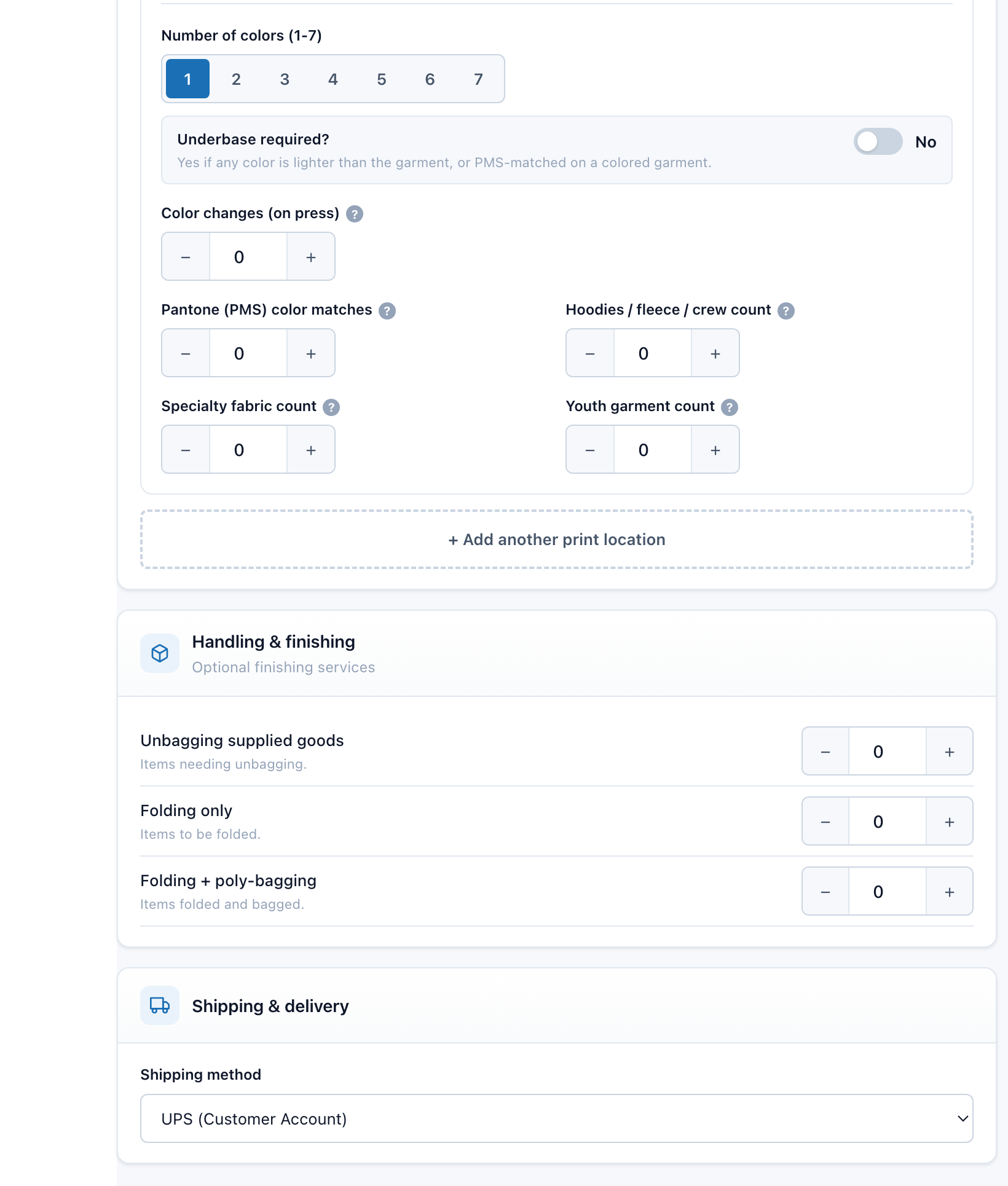
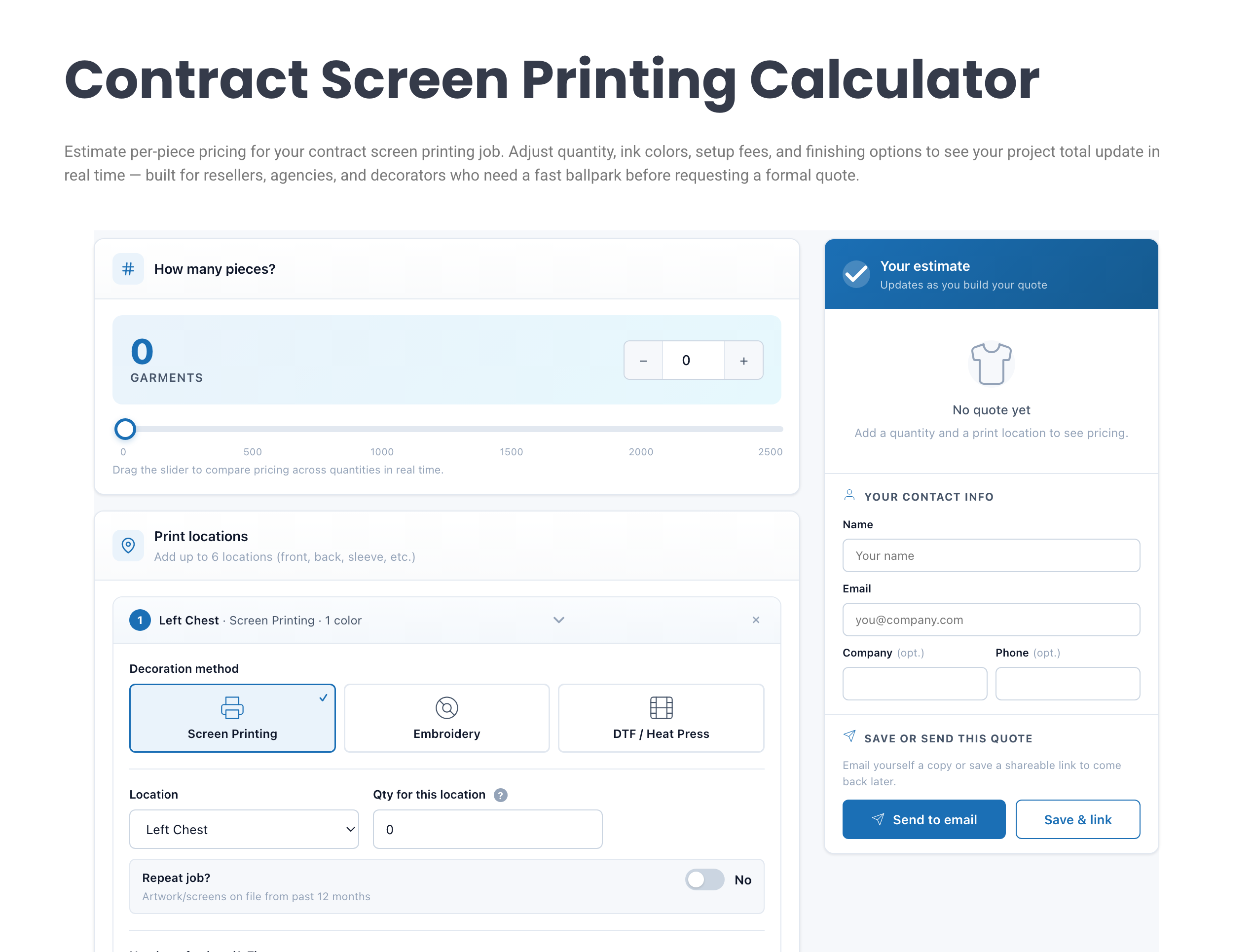
ScreenTek, a 50-year screen-printing shop in Hamden, CT. The work shipped: a full site redesign plus a self-serve quoter that lets customers price their own job.
The outcome: the quoter removed the slowest step in their sales motion, giving warm leads a clear path to price and close themselves instead of waiting on a callback. The same Kitchen Table AI approach as The Build, in a different vertical, and clearly delivered.